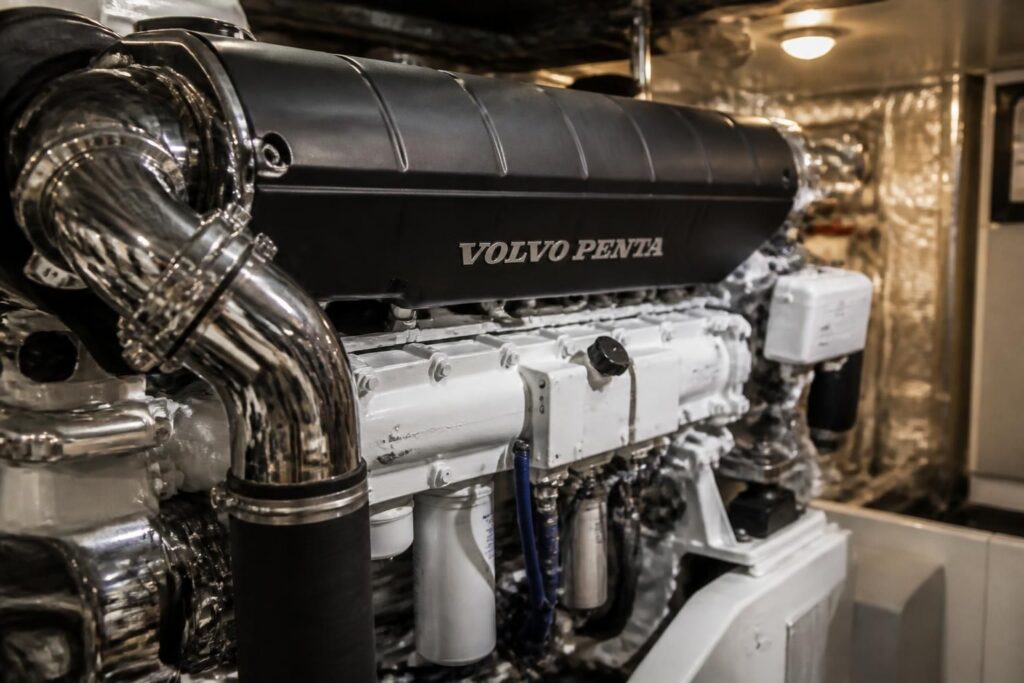
Operating a vessel along the Intracoastal Waterway and through Fort Lauderdale inlets demands continuous mechanical reliability. Your inboard marine diesels function under substantial load in warm, high-humidity, salt-water environments where thermal stress, fuel oxidation, and corrosion accelerate component wear. Implementing disciplined marine diesel engine maintenance protects your powertrain investment, prevents unexpected dockside downtime, and ensures dependable operational performance on every offshore passage.
Establishing a Fluid Analysis Program
Engine lubricating oil and closed-loop coolant function as primary diagnostic indicators for internal mechanical health. Periodic fluid sampling provides early detection of wear metals, fuel dilution, soot loading, and glycol contamination long before physical symptoms surface during operation.
When drawing oil samples from your inboard engines, collect fluid from the midpoint of the oil sump dipstick tube while the engine remains at normal operating temperature. Send these samples to an accredited marine laboratory after every 100 operating hours or at minimum twice per calendar year. The laboratory analysis measures trace concentrations of iron, copper, lead, chromium, and aluminum, signaling bearing journal wear, valve train degradation, or piston ring friction. High sodium or potassium concentrations point toward raw water heat exchanger tube leaks or failing cylinder head gaskets. Tracking these fluid trends across successive sampling cycles allows your engineering team to schedule targeted component overhauls before minor material fatigue results in catastrophic engine failure in the engine room or bilge.
Heat Exchanger Descaling and Cooling System Care
Inboard marine diesel engines rely on raw water cooling circuits to extract thermal energy from closed-loop engine coolant, engine oil, transmission fluid, and fuel returns. In South Florida marine environments, barnacles, calcium deposits, salt crusting, and bio-fouling accumulate rapidly within the copper-nickel or titanium tube bundles inside heat exchangers and oil coolers.
Scheduled chemical descaling restores thermal efficiency and prevents high-temperature engine alarms during full-throttle operations. Circulate a marine-grade biodegradable descaling solution through the raw water circuit every 250 operating hours or during your annual yard period. Disassemble the end caps to inspect raw water pump impellers, zinc sacrificial anodes, and internal tube channels. Replacing worn zinc anodes prevents galvanic corrosion from attacking expensive heat exchanger housings and raw water piping, while fresh raw water impellers prevent thermal spikes caused by missing neoprene impeller vanes in the raw water pump housing.
Turbocharger Inspection and Exhaust System Integrity
Turbochargers operate under extreme thermal expansion and high rotational speeds to maximize fuel efficiency, airflow, and combustion performance. Marine environments create severe working conditions for turbo housing assemblies, turbine wheels, exhaust mixing elbows, and riser joints where raw cooling water mixes with hot exhaust gas.
Inspect the external turbocharger casing for soot trails, oil weeping, or heat shield degradation every 200 operating hours. Remove the air intake filter assembly to inspect compressor wheel blades for impact damage, pitting, or oil film accumulation. Manually verify axial and radial turbine shaft play against manufacturer tolerance limits. Pay close attention to the exhaust mixing elbow and riser connection. Heavy carbon deposits and internal corrosion inside the mixing elbow restrict exhaust gas flow, elevate backpressure, and risk raw cooling water back-feeding directly into engine cylinders through open exhaust valves when idling or shutting down.
Fuel Polishing and Contamination Management
Diesel fuel stability poses an ongoing challenge for yachts docked in South Florida marinas. Condensation inside steel or aluminum fuel tanks creates optimal conditions for microbial growth, bio-sludge accumulation, and free water settling at the bottom of fuel tanks.
Regular fuel polishing recirculates diesel fuel through multi-stage filtration units to strip free water, emulsified water, and suspended solid particulate matter down to two microns. Combine periodic fuel polishing with primary racor fuel filter replacement every 100 operating hours. Monitor differential vacuum gauges on your primary fuel filter manifold to identify element restriction before fuel starvation damages high-pressure common rail injection pumps or unit injectors. Clean diesel fuel maintains precise injector spray patterns, preserves fuel delivery pressure, and ensures clean combustion across all engine cylinders.
Scheduled Maintenance Routines and Dockside Care
A structured preventative maintenance schedule divides tasks into daily pre-voyage checks, weekly vessel inspections, 100-hour service intervals, and annual overhaul requirements. Daily pre-voyage checks require inspecting engine oil levels, coolant expansion tanks, sea strainers, belt tension, and raw water seacocks. Weekly inspections focus on checking bilge water levels, verifying automatic bilge pump operation, examining shaft seal packing glands, and monitoring battery charge voltages.
Every 100 operating hours, service technicians change primary and secondary fuel filters, renew engine oil and oil filters, inspect engine zincs, and clean air intake filters. Annual service intervals expand to cover cooling system descaling, heat exchanger pressure testing, raw water pump rebuilding, valve lash adjustment, shaft alignment checks, and turbocharger inspection. Consistently executing these technical protocols safeguards vessel seaworthiness, reduces long-term repair costs, and preserves high resale values across the yacht market.
Professional Care with Yacht Management Professionals
Maintaining complex marine propulsion systems requires disciplined record-keeping, specialized technical tooling, and consistent dockside execution. For vessel owners docked from Bahia Mar to Las Olas Marina and throughout Fort Lauderdale, dedicated management ensures every propulsion system operates within exact factory tolerances.
Yacht Management Professionals delivers structured vessel care through published plan tiers, including Basic Monthly Maintenance, Premium Maintenance, and Complete Care. Our team handles vendor coordination, weekly vessel inspections, maintenance record management, and 24/7 emergency response from our primary facility at 2525 Marina Bay Dr W, Fort Lauderdale, FL 33312\. Core operational service lines include yacht management, yacht maintenance, and yacht detailing.
Proactive Marine Diesel Engine Maintenance
Consistent marine diesel engine maintenance secures long-term powertrain reliability, preserves vessel value, and ensures safe operation across all sea conditions. Schedule a service with Yacht Management Professionals or contact our office to establish a customized maintenance plan for your vessel today.