
Boating in saltwater offers thrilling adventures and breathtaking views, but it also presents unique challenges, especially when it comes to protecting your vessel from the corrosive effects of salt. Without proper care, saltwater exposure can severely damage your boat’s equipment, reducing both its functionality and lifespan. Safeguarding your onboard electronics, running gear, and structural fiberglass from rapid mineral decay requires a consistent, proactive defense. While establishing a comprehensive upkeep program through a professional team for yacht management is the most reliable way to neutralize salt damage before it takes hold, mastering the basics of marine corrosion control is vital for any active cruiser.
Understanding Saltwater Corrosion
Saltwater corrosion occurs when salt particles react with the metals and materials on your boat. Since salt attracts moisture, it promotes oxidation (rust) on metal surfaces. In addition to metal, salt also weakens rubber, wood, plastic, and fabric, causing cracking, fading, and other forms of deterioration. Without consistent maintenance, these issues can escalate, resulting in costly repairs and reduced performance.
Common Boat Equipment Affected by Saltwater
- Engines: Corrosion inside the engine’s cooling system can occur if you don’t flush with fresh water after each saltwater trip.
- Propellers and Shafts: Constant saltwater exposure reduces efficiency, affecting your boat’s fuel economy and speed.
- Electrical Systems: Saltwater conductivity may cause short circuits and damage sensitive electronics.
- Metal Fixtures: Items like cleats and rails are prone to rust and corrosion if not properly protected.
- Hull and Deck: Salt exposure leads to blistering, cracking, and fading without proper cleaning and protective coatings.
- Upholstery and Fabrics: Salt residues can degrade and discolor seating, covers, and other materials.
How to Combat Saltwater Damage on Your Boat
- Regular Rinsing and Cleaning
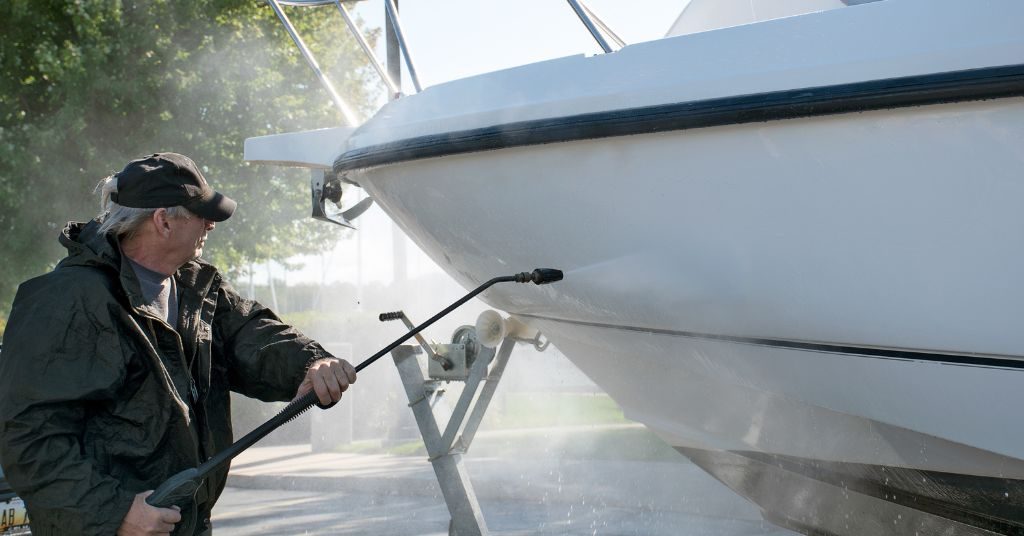
Rinse your boat thoroughly with fresh water after each outing to remove salt residue. Pay close attention to the hull, deck, engine, and metal fixtures. Utilizing routine, professional-grade washdown support ensures thorough salt removal and long-term protection. - Flushing the Engine
Flush the engine with fresh water after every saltwater trip to prevent corrosion inside the cooling system. Regular checks and professional maintenance help keep your engine performing at its best. - Protecting Electrical Components
Use corrosion-resistant connectors, apply dielectric grease, and seal openings to prevent saltwater intrusion. Professional inspections ensure your electrical systems remain protected against damage. - Applying Protective Coatings
Use anti-corrosion sprays on metal parts and marine wax on fiberglass or painted surfaces to form a barrier against saltwater damage. Professional detailing services can expertly apply these treatments, extending your boat’s lifespan. - Regular Inspections and Repairs
Frequent inspections catch potential problems early. Check for hull cracks, rust on metal parts, and signs of stiffened or discolored upholstery. Qualified local dockside service technicians can handle inspections and repairs, preserving your vessel’s condition and value. - Proper Storage and Covers
When not in use, shield your boat from the elements with a high-quality cover to protect it from salt spray, UV rays, and debris. Choosing dry storage whenever possible reduces exposure to harmful conditions and further safeguards your investment.
Conclusion
While saltwater is a natural part of the marine environment, proactive maintenance can minimize its damaging effects. Incorporating regular cleaning, inspections, and protective measures will keep your boat in pristine condition for years to come. If you want to make sure your vessel receives the meticulous rinsing, flushing, and protective coating applications it needs without losing your valuable free time, we are here to streamline the entire process. Explore our primary Yacht Management Fort Lauderdale hub to see how easily our customized maintenance programs can take the burden of saltwater defense off your shoulders.